
Silicon, with the symbol Si and atomic number 14, is key to today’s technology, mainly in semiconductors. It has a high melting point of 1414°C and boils at 3265°C. Its density is about 2.329 g/cm³ at 20°C, showing its importance in many uses.
It makes up about 27.7% of the Earth’s crust by mass. Silicon also plays a big role in plant biology.
Knowing about silicon’s properties is essential for understanding its uses in technology. Silicon is used in everything from electronics to renewable energy. Its density and characteristics are more critical than ever.
Introduction to Silicon and Its Importance
Silicon is a metalloid that is key in materials science. It has unique properties that are essential for modern technology. Silicon is used in many things like transistors, solar cells, and integrated circuits.
The rise of Silicon Valley shows how important silicon is for technology. It’s used a lot because it’s easy to find and works well with electricity. This makes it perfect for making semiconductors.
Silicon’s uses go beyond just electronics. It helps in renewable energy and computer technology too. Its ability to switch and convert energy makes it very valuable. As technology keeps getting better, silicon will play an even bigger role.
Understanding the Chemical Properties of Silicon
Silicon is known for its special chemical properties. These properties are key in many uses. It can form four bonds, leading to a wide range of silicon compounds.
These compounds can have different oxidation states. This shows silicon’s ability to react and adapt in various ways.
Silicon is mostly found as silicon dioxide (SiO2) and silicates. These are important in building and making things. Silicon is very reactive but is mostly found in compounds in nature.
This makes pure silicon rare. Silicon’s ability to bond with other elements is vital in making semiconductors.
Density for Silicon
The silicon density overview is key to understanding silicon’s role in many fields, like the semiconductor industry. Silicon has a density of about 2.329085 g/cm³ at room temperature. This number is important for making electronic parts, affecting both its physical traits and how well it works.
Overview of Silicon’s Density
Several things can change silicon’s density, like its crystal structure and any added alloys. Silicon usually has a diamond cubic structure, which greatly affects its density. Changes in purity and alloys can also alter its density, making it better suited for certain uses.
Implications of Density in Semiconductor Applications
The density of silicon impacts how well it works in semiconductors. A denser silicon can make transistors and other parts work better, boosting efficiency. When making electronic devices, knowing silicon’s physical properties is critical to get the best performance and reliability.
Silicon’s Role in the Semiconductor Industry
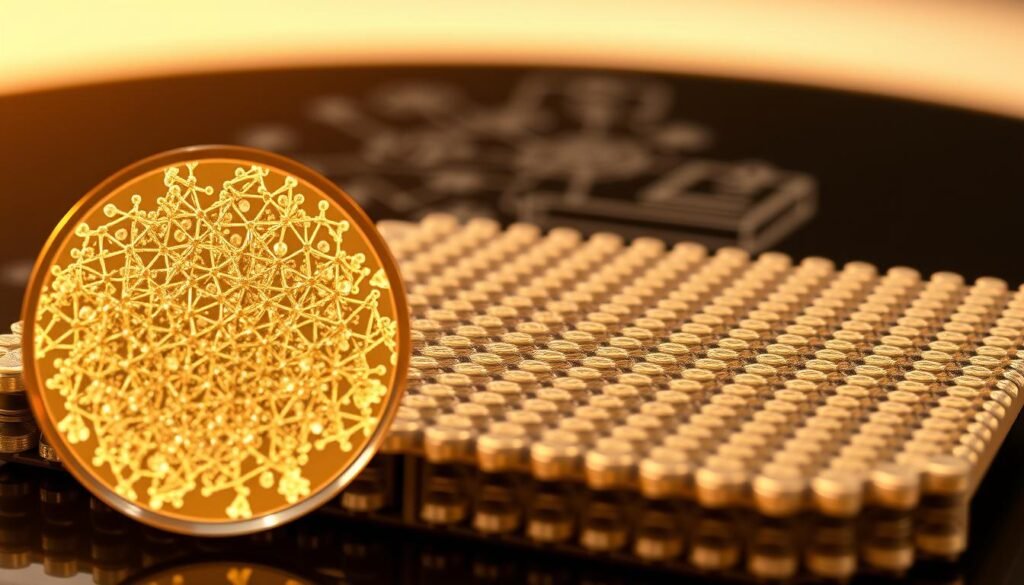
Silicon is key in the semiconductor world. It’s the main material for making silicon wafers, used in integrated circuits (ICs). Silicon’s special atomic structure lets it change its electrical properties easily through doping. This makes it a vital part of silicon electronics.
Silicon is found in many electronic devices, like computers and smartphones. It’s also used in renewable energy solutions. Its ability to create high-quality insulating oxide layers makes it even more valuable in today’s tech.
Knowing how silicon impacts the semiconductor field is important. It’s the foundation for many electronic innovations. For more details, check out Silicon’s Importance in the Semiconductor Industry.
Silicon is also very common, making up about 27.7% of the Earth’s crust. As technology advances, silicon will continue to play a critical role. It will help drive future innovations in electronics.
How Silicon Is Processed for Use in Electronics
Silicon processing turns raw materials into high-purity silicon for electronics. It starts with silicon extraction methods from silica ore. These steps help create different silicon grades for various tech uses.
Methods of Extracting Silicon from Its Ore
Extracting silicon is key to its quality and purity. A common method uses carbothermic reduction in an electric arc furnace. This makes metallurgical-grade silicon, about 98-99% pure.
After that, more refining can increase purity even more. This is important for semiconductors, reaching over 99.9999% purity.
Impact of Purity on Density and Electrical Conductivity
Silicon purity affects its density and electrical conductivity. Higher purity means a better crystal structure and improved electrical performance. This is vital for semiconductors.
As silicon processing increases purity, it becomes better for advanced electronics. This makes it perfect for high-tech devices.
| Silicon Grade | Purity (%) | Applications |
|---|---|---|
| Metallurgical Grade | 98-99 | Alloys, solar panels |
| Electronic Grade | 99.999 | Microprocessors, integrated circuits |
| Ultra High Purity (UHP) | 99.9999+ | Advanced electronics, sensors |
Physical Characteristics of Silicon
Silicon is a key material in electronics because of its physical traits. It is hard, brittle, and has a bluish-grey shine. This look comes from its diamond cubic structure.
This structure also helps silicon handle high temperatures well. It’s important for semiconductors.
Thermal and electrical conductivity are key benefits of silicon. It conducts electricity well and stays strong under heat. Silicon’s bonds make it stable and strong, perfect for many electronic devices.

The Relationship Between Silicon Density and Temperature
The connection between silicon density and temperature is key to understanding its thermal properties. When temperature rises, silicon density often falls. This shows how sensitive silicon is to heat changes. This sensitivity is critical in electronics, where keeping temperature stable is vital for good performance.
Effects of Temperature on Silicon Density
As silicon heats up, it expands. This expansion can affect its structure and how well it works. In electronics, managing these changes is important to keep devices running smoothly and reliably.
Melting and Boiling Points of Silicon
Knowing when silicon melts and boils is important for its thermal properties. Silicon melts at about 1,410°C and boils at around 2,355°C. These temperatures mark when silicon changes from solid to liquid and from liquid to gas. This shows why managing heat is so important in high-temperature uses.
| Property | Value |
|---|---|
| Melting Point | 1,410°C |
| Boiling Point | 2,355°C |
| Density at 20°C | 2.33 g/cm³ |
| Density at 1,000°C | 2.2 g/cm³ |
Comparison of Silicon Density with Other Materials
When we look at silicon density compared to other semiconductor materials, some key differences stand out. Silicon has a density of about 2.33 g/cm³. On the other hand, germanium, another important semiconductor, is denser at around 5.32 g/cm³. This difference affects things like weight, structure, and how well devices work.
For engineers and designers, knowing about materials density is key. Silicon’s moderate density makes it useful for many applications, like when weight matters. Other materials like gallium arsenide and indium phosphide have densities of 5.32 g/cm³ and 4.81 g/cm³, respectively. This makes choosing the right material even more important for device performance.
| Material | Density (g/cm³) | Applications |
|---|---|---|
| Silicon | 2.33 | General semiconductor applications |
| Germanium | 5.32 | High-performance electronics |
| Gallium Arsenide | 5.32 | Optoelectronics, high-frequency devices |
| Indium Phosphide | 4.81 | Telecommunication devices, lasers |
By looking at these density differences, engineers can make better choices. This helps improve efficiency and function in many electronic devices.
Applications of Silicon in Everyday Technology
Silicon is key in modern tech, mainly in electronics and green energy. Its special properties make it vital for many tech uses. This boosts how well electronic devices work and how efficient they are.
Silicon in Computers and Smartphones
Silicon is super important in computers and phones. It helps with data processing, memory, and signal sending. Thanks to better making methods, silicon parts get smaller and more powerful.
This means devices can do more with less space. It shows how silicon is vital in our digital world.
Silicon’s Use in Renewable Energy Technologies
Silicon is also big in green energy, like solar panels. Silicon cells turn sunlight into electricity, helping us use more green energy. As we want to use more green energy, we’ll need more silicon for solar tech.

| Application | Description | Impact |
|---|---|---|
| Computers | Use of silicon chips for processing and memory | Enhanced computing power and efficiency |
| Smartphones | Integration of silicon components in mobile devices | Miniaturization and improved functionality |
| Solar Energy | Silicon-based photovoltaic cells | Increased adoption of renewable energy solutions |
The Future of Silicon in Electronics
The future of silicon in electronics looks promising. Ongoing research and development are making silicon more efficient and powerful. This will be key for progress in computing, telecommunications, and renewable energy.
One exciting area is silicon-based quantum devices. They could change how we compute, making things faster and using less power. Quantum computing is coming, and silicon might play a major role in it.
Advances in silicon nanostructures are making devices smaller and more efficient. This could lead to better performance in everyday electronics. Think of smartphones and smart appliances getting even smarter.
Looking ahead, silicon will be used in new ways. Researchers are working on making silicon materials better for specific tasks. This could lead to big breakthroughs in artificial intelligence and the Internet of Things (IoT).
As we move forward, teamwork between researchers and tech companies is vital. Their collaboration will help create new silicon innovations. This will strengthen the current silicon ecosystem and open up new possibilities in electronics.
Environmental Aspects of Silicon Production
The process of making silicon has big environmental effects that need to be looked at closely. It takes a lot of energy to extract and process silicon. This leads to more greenhouse gases and less resources. As silicon demand grows, it’s key to find ways to make it more sustainable.
To make silicon production more sustainable, we need to use less energy and create less waste. Using cleaner technologies and recycling materials are important steps. These actions help reduce the environmental impact of making semiconductors.
Researching new ways to extract silicon could also help. New methods might make production less harmful to the environment. By working on these issues, the semiconductor industry can move closer to being more sustainable.
Conclusion
Summing up, silicon is key in today’s tech world. Its special traits, like being dense and easy to process, make it very useful. The chip industry relies on silicon because it’s so good at many things.
As tech keeps getting better, silicon will be needed more. It’s important for gadgets and green energy too. Silicon is leading the way in new tech, helping many fields grow while keeping things green.
So, silicon is here to stay in tech’s future. New studies on silicon will bring even more cool stuff. It’s clear silicon is a big deal for electronics.