
Knowing the properties of carbon steel is key for its use in many fields. Its density is a major factor, affecting how well it works. This article looks closely at carbon steel’s density and its role in choosing the right material for projects.
By understanding carbon steel’s density, we can see how it affects its performance. This is important in engineering, construction, and manufacturing. Its density is a big part of why carbon steel is so useful and long-lasting.
Introduction to Carbon Steel
Carbon steel is a key material in many industries. It’s known for its strength and durability. It’s made mostly of iron and carbon, with carbon levels between 0.05% and 2.1% by weight.
This mix of elements gives carbon steel its unique properties. It’s strong, yet affordable. This makes it perfect for many uses, like building, cars, and manufacturing.
Carbon steel can be used for both light and heavy parts. This shows how important it is to know about it.
What is Carbon Steel?
The American Iron and Steel Institute (AISI) defines carbon steel by its main feature: carbon content. This steel type is known for the amount of carbon it has. This amount affects its strength, hardness, and how well it bends.
Carbon steel is divided into three main types: low-carbon, medium-carbon, and high-carbon. Each type is made for different uses. Low-carbon steel, with up to 0.3% carbon, is soft and easy to shape. It’s often used for making pipes and sheets.
Medium-carbon steel, with 0.3% to 0.6% carbon, is strong and flexible. It’s great for car parts and machinery. High-carbon steel, with more than 0.6% carbon, is very hard and strong. It’s perfect for making tools and cutting tools.
Other elements like manganese and silicon are also in carbon steel. These help make the steel stronger, harder, and more flexible. Knowing about carbon steel helps us choose the right material for different jobs.
Understanding Carbon Steel Density
Carbon steel density is key to its uses and how well it performs. It’s the mass per unit volume, usually around 7850 kg/m³ (or 0.284 lb/in³). Knowing this helps us see how it affects strength, weight, and behavior in different situations.
Definition and Importance
Density is more than just a number. It affects the mechanical properties of carbon steel. This knowledge helps engineers and designers choose the right material for their projects, considering weight and structure.
Factors Affecting Density
Several things can change the density of carbon steel. These include:
- Carbon Content: More carbon means higher density, which boosts strength and hardenability.
- Alloying Elements: Manganese and silicon can change density, affecting toughness and ductility.
- Microstructure Variations: Different internal structures can alter density, impacting mechanical properties.
Grasping these points is vital for customizing carbon steel for various uses.
Types of Carbon Steel
Knowing the different types of carbon steel is key to picking the right material for certain jobs. Carbon steel is mainly sorted by its carbon content. This leads to various traits fitting different needs. The main types are low-carbon, medium-carbon, and high-carbon steel.
Low-Carbon Steel
Low-carbon steel has up to 0.30% carbon. It’s very malleable and ductile. This makes it perfect for the auto and building industries. It’s used for pipes and building parts.
Its low carbon content makes it easy to shape and weld. This is why it’s used so widely.
Medium-Carbon Steel
Medium-carbon steel has about 0.30% to 0.60% carbon. It balances strength and flexibility well. It’s used in things like car parts and train wheels.
Its mix of strength and workability makes it popular in engineering.
High-Carbon Steel
High-carbon steel has 0.60% to 1.25% carbon. It’s hard and strong. It’s used for tools, strong wires, and more.
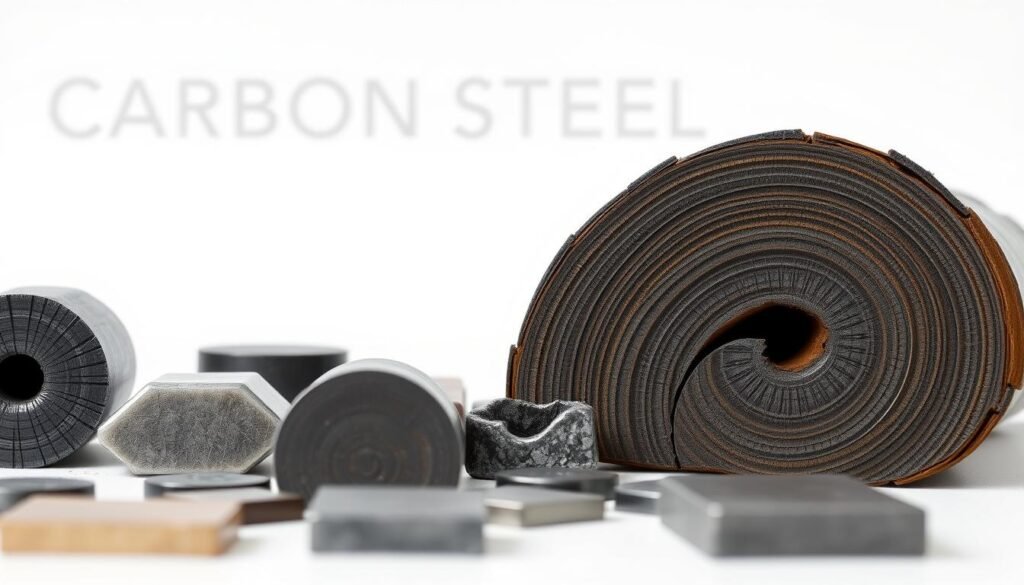
For a full look at these categories, check out this detailed source. Knowing these types helps us understand what each is best for.
Density of Carbon Steel Grades
The density of carbon steel grades is very important. It affects their strength and how they are used. Different grades have different densities because of their carbon content and alloying elements.
Density Variations in Low, Medium, and High Carbon Steel
Low-carbon steel has a density of 7.75 g/cm³ to 8.05 g/cm³. Medium-carbon steel has a similar density, making it consistent. High-carbon steel has a density of 7.81 g/cm³ to 7.85 g/cm³, thanks to more carbon.
These differences in density matter a lot. They affect how steel is used in building and making things.
Impact of Alloying Elements on Density
Alloying elements change the density and performance of carbon steel. Manganese and nickel, for example, can increase density and strength. Knowing these changes is key when choosing materials.
For more on the density of carbon steel grades, check out this resource.
Physical Properties Related to Density
Density and the physical properties of carbon steel are key to its performance. Attributes like strength, durability, ductility, and malleability are important. They help engineers and manufacturers make the right choices.
Strength and Durability
The strength of carbon steel is linked to its density. Materials with higher density are stronger and lighter. This makes them perfect for building structures.
They can handle a lot of stress and last longer. This is because of their density.
Ductility and Malleability
Density also affects how carbon steel bends and can be shaped. Higher-density steels might not bend as well. This is true for high-carbon steels.
Knowing this helps in choosing the right material for projects. It’s all about finding the right balance.
Applications of Carbon Steel
Carbon steel is used in many industries because of its strong and affordable nature. It’s a top pick for construction and cars. Its wide use shows how important it is in our daily lives and buildings.
Construction
In building, carbon steel is a main material for parts like beams and columns. It makes buildings strong and stable. Plus, it’s light, making it easy to move and set up.
Automotive Industry
In cars, carbon steel is key for parts like the chassis and body. It’s flexible, which helps in making complex designs. It’s also cheap and lasts long, fitting many car types.
Tools and Equipment Manufacturing
High-carbon steel is great for making tools and machinery parts. It’s hard, making it perfect for sharp tools and blades. Its use boosts efficiency and accuracy in making things.
Comparison with Other Steel Types
In the world of metals, comparing carbon steel to others is key. It helps us see how they differ in corrosion resistance, strength, and use. Knowing about stainless steel’s properties helps experts choose the right material for their needs.
Carbon Steel vs. Stainless Steel
Carbon steel is known for its strength and low cost. It’s a favorite in many fields because it’s easy to work with. Stainless steel, on the other hand, is great at fighting off corrosion thanks to its chromium content.
This makes stainless steel perfect for places where moisture and chemicals are present. Carbon steel, without this protective layer, is more likely to rust and corrode if not cared for.
Density Comparison with Other Materials
The density of steel types changes a lot, affecting where they can be used. Carbon steel has a density of about 7.85 g/cm³. It’s denser than aluminum but less dense than some copper alloys.
This shows carbon steel’s strong point in strength-to-weight ratios compared to lighter materials. Knowing the density of steel types helps engineers and designers pick the best material for their projects.
Conclusion
In this article, we covered the basics of carbon steel density. We talked about how it affects strength, malleability, and ductility. Knowing the density of different carbon steel grades is key for engineers and designers.
This knowledge helps them choose the right materials for their projects. It ensures the materials last long and work well. For more details, check out this resource on carbon steel density.
Looking ahead, new technologies and composite materials will open up more uses for carbon steel. These advancements will make carbon steel even stronger and more versatile. This will help meet the needs of different industries.